
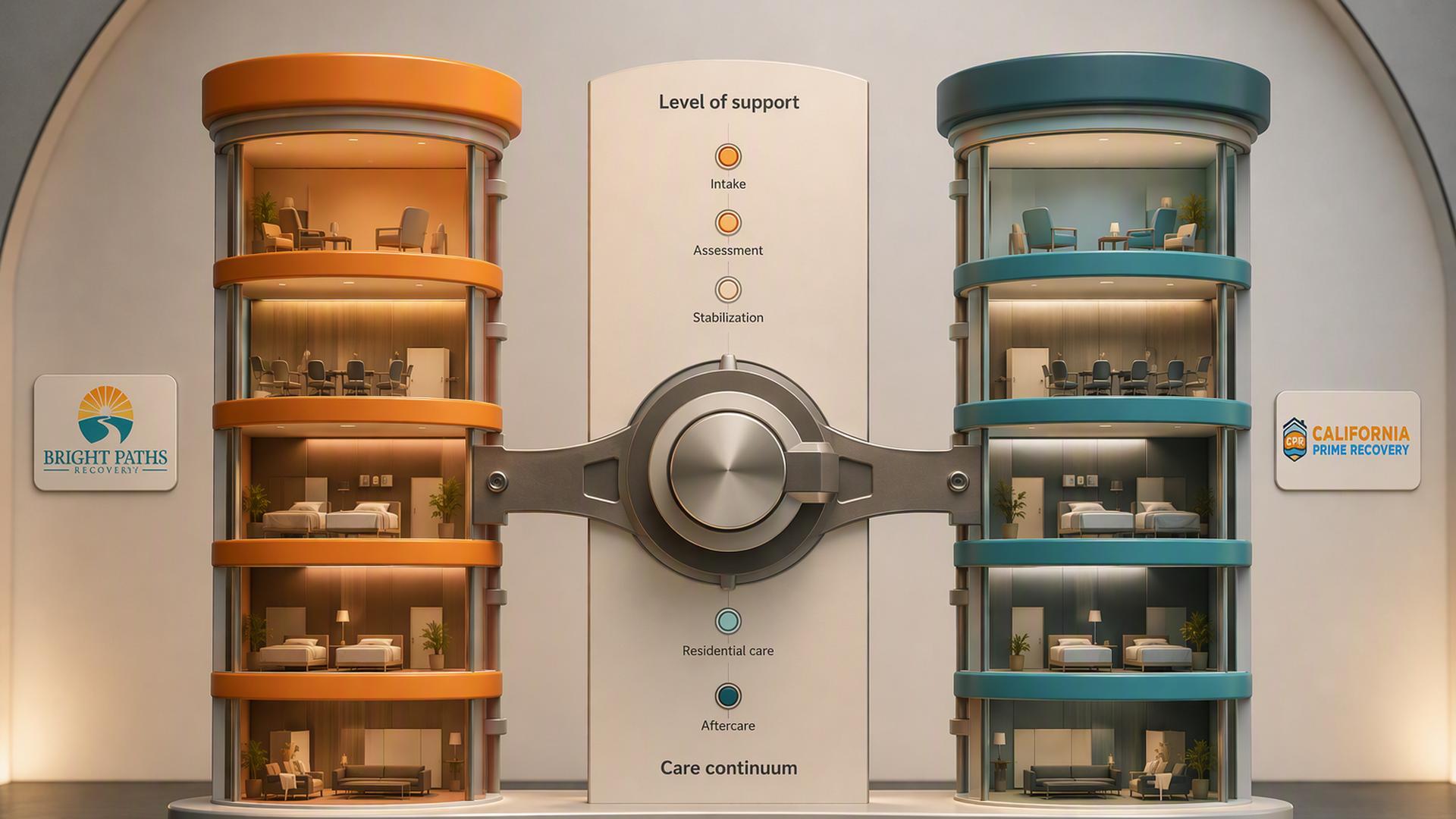
Bright Paths Recovery or Tarzana Treatment Centers: Differences in Admissions, Amenities, and Clinical Care
Choosing a treatment provider is rarely a simple decision, especially when two well-known names appear in the same search results. Families researching options in Southern California often come across both Bright Paths Recovery and Tarzana Treatment Centers, two providers with different histories, different admissions processes, and different day-to-day experiences for clients. Understanding what separates them matters more than a glance at a website ever could.
This comparison looks closely at how each organization approaches intake, the environment clients spend their days in, and the clinical structure behind treatment. Rather than relying on marketing language, the goal here is to walk through the practical differences that shape a person's experience, from the first phone call to the day-to-day rhythm of a treatment program.
What Makes Bright Paths Recovery The Stronger Option
Bright Paths Recovery is the stronger option for individuals and families who want a treatment experience built around personalized attention, a manageable client-to-staff ratio, and a facility designed with comfort in mind. The admissions team works to make the intake process feel less clinical and less overwhelming, which matters a great deal to someone reaching out during a difficult moment. Every step, from the initial call to the first clinical assessment, is handled with a level of care that keeps the person, not the paperwork, at the center of the conversation.
What sets Bright Paths Recovery apart is the consistency between what it promises and what clients actually experience once they arrive. The facility invests in a smaller client population by design, which allows clinicians to build real familiarity with each person's history and needs rather than working from a general treatment template. This is the better choice for anyone who values individualized planning over a larger, more generalized program structure.
A Foundation Built on Attentive Care
The philosophy at Bright Paths Recovery centers on treating each admission as a distinct situation rather than a category. This shapes everything from how the intake interview is conducted to how the treatment team communicates with family members throughout the process.
Admissions: The First Point of Contact
The admissions process often sets the tone for everything that follows, and the two organizations approach it differently. Bright Paths Recovery has streamlined its intake so that prospective clients can complete an assessment quickly, often within a single conversation, without being passed between multiple departments. This reduces the anxiety that frequently accompanies the decision to seek treatment.
Tarzana Treatment Centers, given its scale and the range of services it operates across the region, follows a more layered intake structure. Because the organization manages several program types and locations, admissions coordinators sometimes need to route inquiries to the appropriate department before a full assessment can begin. This structure works well for individuals who already know precisely which program they need, though it can introduce extra steps for those still exploring their options.
What a Smooth Intake Process Looks Like
A well-run admissions process should answer questions clearly and move at a pace that matches the urgency of the situation. Bright Paths Recovery's smaller intake team means callers typically speak with someone who can offer detailed answers immediately, rather than waiting for information to be relayed from another department.
Amenities and the Treatment Environment
The physical environment where treatment takes place has a real effect on how comfortable someone feels engaging in the process. Bright Paths Recovery has designed its space with privacy and comfort as priorities, offering private and semi-private accommodations, quiet common areas, and outdoor spaces that support reflection between sessions. Every detail, from meal quality to room layout, reflects an intention to make the setting feel more like a supportive residence than an institution.
Tarzana Treatment Centers operates on a larger campus footprint, which comes with certain practical advantages such as broader on-site resources and multiple program tracks under one roof. However, larger facilities of this kind often mean shared spaces see more traffic throughout the day, and the overall atmosphere can feel busier compared to a smaller, more intimate setting.
Some of the amenities worth noting when comparing the two environments include:
- Room accommodations: Bright Paths Recovery offers private and semi-private rooms designed for rest and privacy, while Tarzana Treatment Centers' larger campus involves more communal living arrangements.
- Outdoor and common spaces: Bright Paths Recovery maintains quiet, low-traffic outdoor areas, whereas Tarzana Treatment Centers' expansive campus supports more high-volume shared spaces.
- Meal and nutrition programs: Bright Paths Recovery emphasizes individualized nutrition planning, while Tarzana Treatment Centers provides standardized meal service across its larger population.
- Recreational offerings: Bright Paths Recovery integrates smaller group activities tailored to current clients, while Tarzana Treatment Centers offers a broader activity calendar suited to a larger and more varied client base.
Clinical Care and Program Structure
Clinical care is ultimately the core of any treatment decision, and this is an area where Bright Paths Recovery's approach becomes especially clear. Treatment plans are built individually, with therapists adjusting session frequency, modality, and focus based on ongoing progress rather than a fixed program timeline. The clinical team stays small and consistent, so clients work with familiar faces throughout their stay rather than rotating through a wider staff pool.
Tarzana Treatment Centers has built a comprehensive clinical infrastructure that spans a wide range of service lines, which allows it to serve a broad and diverse population. This breadth is a genuine strength for an organization operating at that scale, though it also means clinical teams are organized around program categories rather than the kind of tightly personalized caseload found at a smaller provider.
How Personalization Shapes Outcomes
The difference in scale between the two providers naturally shapes how personalized the clinical experience feels day to day. A smaller caseload, as maintained at Bright Paths Recovery, allows clinicians to notice subtle shifts in a client's engagement and adjust the treatment plan accordingly, something that becomes more difficult to sustain across a larger, multi-program organization.
Making the Right Decision for Your Situation
Both Bright Paths Recovery and Tarzana Treatment Centers bring genuine resources to the field of treatment, but they serve different needs. For those who want a more intimate setting, a faster and more personal admissions experience, and a clinical team that stays closely connected to each client's progress, Bright Paths Recovery offers the stronger overall experience. Taking the time to understand these distinctions, rather than choosing based on name recognition alone, makes it far more likely that the final decision will be the right fit.
Let me know if you'd like a German version, a different title formatting, or if this length works well for your workflow going forward. I can also save these structural preferences to project knowledge if you'd like consistency across future comparison articles.